Explore whether our approach fits your context
If this way of working aligns with the challenges you face, we can explore whether Intergo’s role would add value in your context.
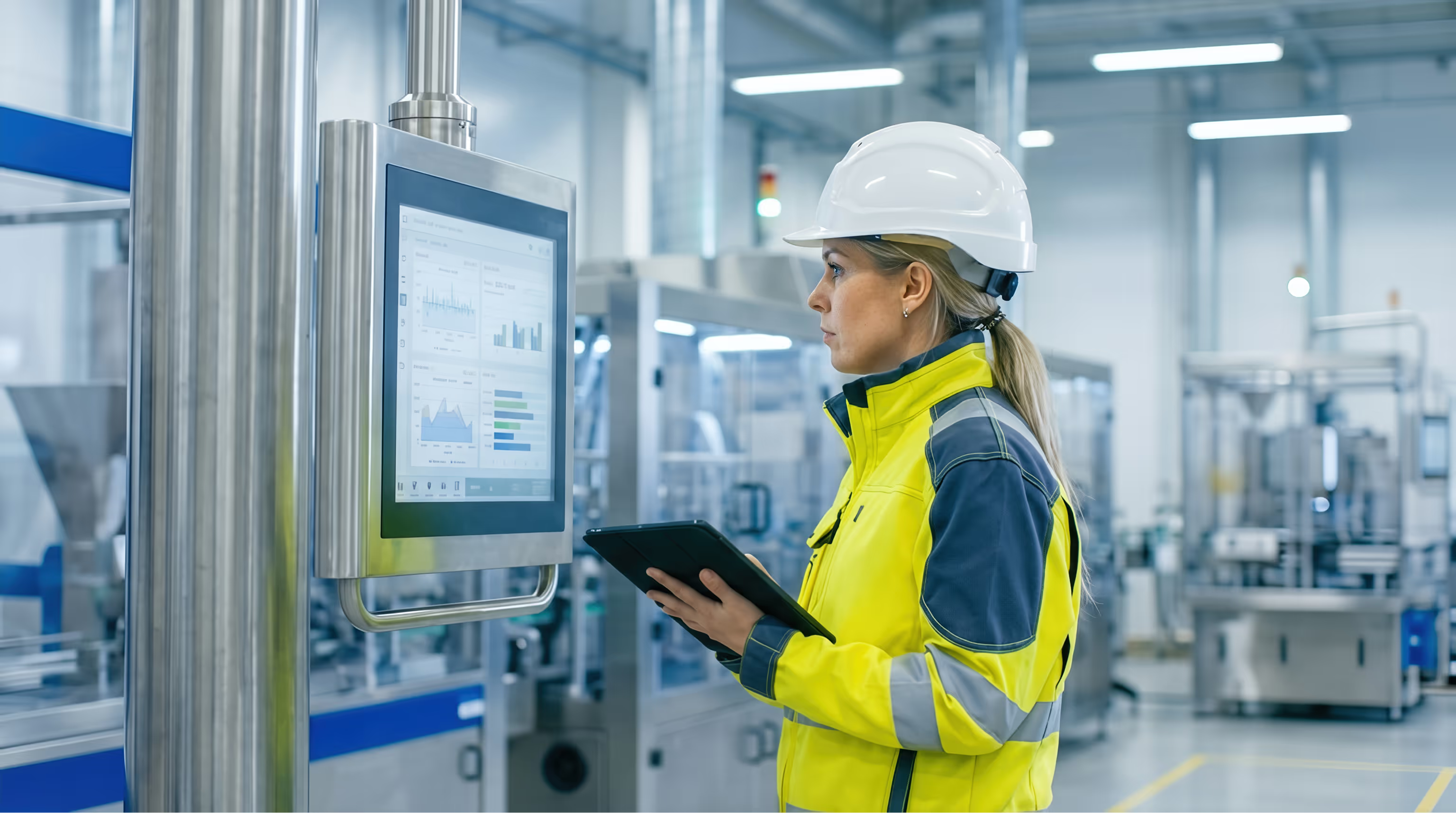

The human touch in technology
What we do: An introduction
At Intergo, we support organisations in introducing and implementing new technologies in complex operational environments. New systems, automation or digital tools can improve efficiency and performance, but they also change how people work and how risks are managed.
We analyse how new technologies interact with existing systems, work processes and organisational structures. This includes human factors analysis, risk analysis and the assessment of potential impacts on safety, health and operational performance.
Where needed, we develop and test concepts or prototypes to evaluate how new technologies will be used in practice. User testing and operational simulations help us understand how people interact with the technology and whether it supports safe and effective work.
Based on these insights, we help organisations adapt system design, workplaces and procedures so that new technologies can be introduced safely and effectively.
In this way, technological change contributes to improved performance while maintaining safe, healthy and resilient operations.
Our services: practical solutions

Human–system interaction
We design and validate interfaces and tools so that operators can interact with systems safely, clearly and effectively.

Work environment design
We design operator workplaces – from control rooms to driver cabins – that support safe, efficient and comfortable work.

Safety & human factors validation
We assess how people perceive and respond to operational environments to ensure that systems can be used safely in practice.

Operational technology integration
We help organisations introduce digital tools and operational technologies so that they work safely and effectively in real operations.
In practice: how we've helped organisations

Driver cabin ergonomics and design
Assessing and designing driver cabins to ensure ergonomic, safe, and standards-compliant workplaces for vehicle operators.
Driver cabin ergonomics and design
Assessing and designing driver cabins to ensure ergonomic, safe, and standards-compliant workplaces for vehicle operators.
Challenge
Vehicle manufacturers typically design driver cabins for a broad range of operators and operational contexts. However, when vehicles are ordered for a specific network or operator, additional requirements often arise. Operators may need to integrate specific equipment, address driver ergonomics, or ensure compliance with national or international standards. At the same time, the design must respect structural limitations of the vehicle platform. For vehicles that are already built or delivered, operators may also want to understand whether the cabin meets ergonomic standards and operational needs.
Impact
The result is a driver cabin that supports safe and comfortable operation while complying with relevant standards and operational requirements. Our independent evaluations provide operators with confidence that cabin designs meet ergonomic and regulatory expectations, while early involvement in design helps prevent costly redesign later in the project.
Approach
We evaluate existing cabin designs through ergonomic assessments, standards compliance checks, and operational evaluations. This includes aspects such as reachability of controls, visibility and sight lines, seating position, and integration of equipment. For new vehicles or cabin modifications, we help define a clear programme of requirements, covering aspects such as driver dimensions, reachability, equipment placement, and visibility requirements. Functional requirements are preferred—for example, sight lines may be achieved directly or through camera systems. During development, mock-ups or simulations can be used to evaluate design concepts with drivers. Their feedback is assessed against the programme of requirements and relevant standards.

Digitalising safety procedures
Converting paper-based procedures into digital tools that operators can easily access and use during their work.
Digitalising safety procedures
Converting paper-based procedures into digital tools that operators can easily access and use during their work.
Challenge
Operational staff relied on paper-based safety procedures that were used daily to coordinate activities and maintain safe operations. When the organisation decided to digitalize these procedures, it was essential that the new system would remain easy to use, reliable, and trusted by the operators who depend on it in their daily work.
Impact
The new digital system successfully replaced the paper-based procedures and was integrated into daily operations. It improved accessibility and consistency while maintaining the high level of usability and safety required in a safety-critical environment.
Approach
We supported the development of the digital solution from a human factors perspective. This included translating user needs into design principles, evaluating interface concepts, and organising interactive user sessions with operators. Through simulations and serious game workshops, we explored how the digital procedures would be used in real operational scenarios.
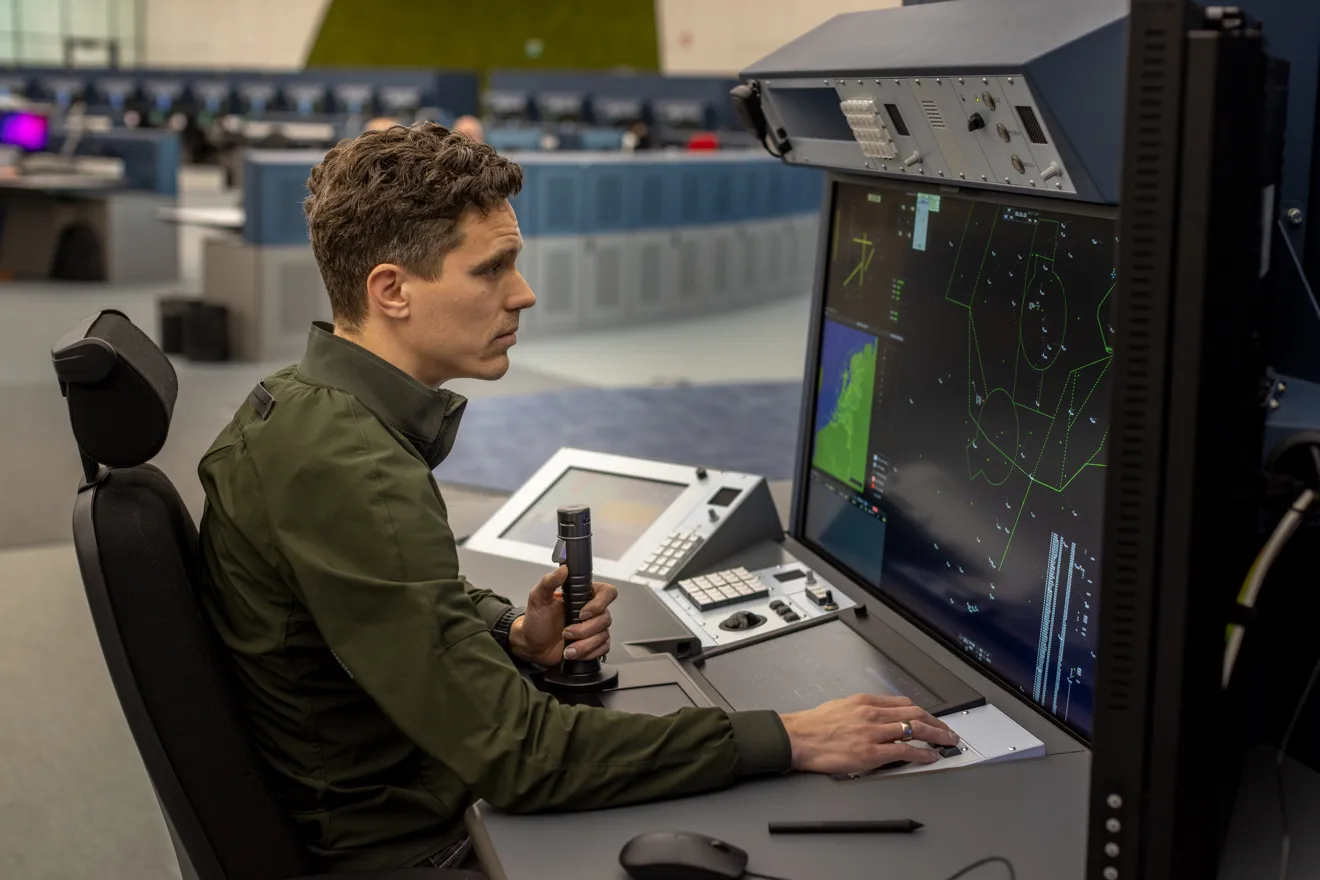
Supporting safe remote operations
Evaluating technologies that allow operators to monitor and control infrastructure safely from a distance.
Supporting safe remote operations
Evaluating technologies that allow operators to monitor and control infrastructure safely from a distance.
Challenge
An infrastructure operator wanted to understand which monitoring and detection technologies would best support remote operations. In remote environments, operators rely heavily on technical systems to maintain situational awareness and make safe decisions. Selecting the right technology was therefore critical for safe operation.
Impact
The evaluation identified technologies that were unsuitable as well as those that showed strong potential. The results provided clear guidance for selecting solutions that improve safety and operational reliability.
Approach
We developed an evaluation framework that combined performance measurements with qualitative feedback from operators. Technologies were assessed using methods such as eye-tracking, observations, and operator interviews. This allowed us to evaluate how effectively each solution supported decision-making.
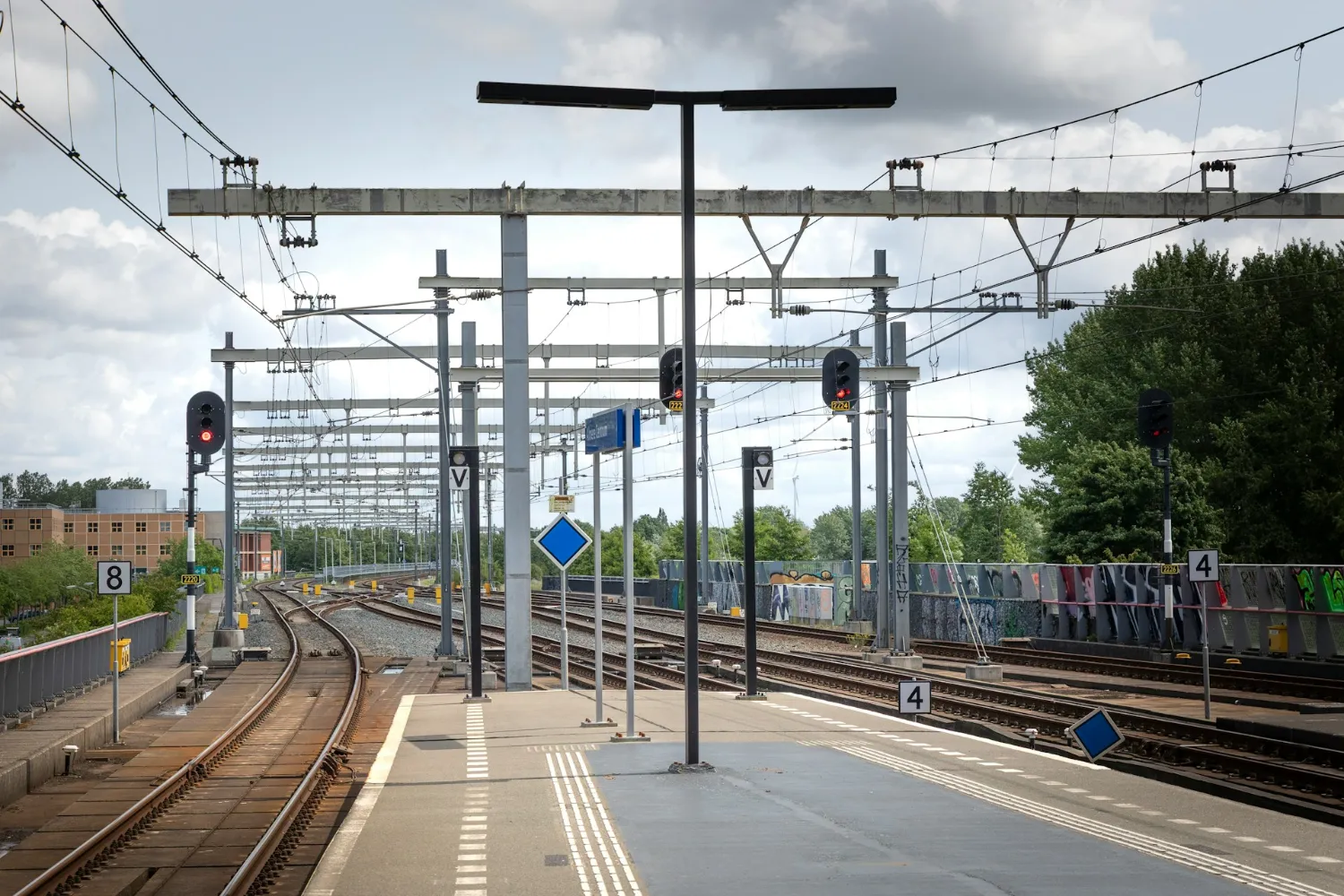
Validating signal visibility for operators
Testing whether signals and indicators are clearly visible and recognisable under real operating conditions.
Validating signal visibility for operators
Testing whether signals and indicators are clearly visible and recognisable under real operating conditions.
Challenge
A new signalling concept had been developed based on insights from human perception research. Before it could be introduced into operations, the design needed to be validated to ensure that operators could reliably recognise and interpret the signal in a wide range of environmental conditions.
Impact
The validation revealed important limitations in the design under certain conditions. Based on these findings, improvements were proposed to ensure the final signal would meet operational safety requirements.
Approach
We developed a structured validation trial that tested visibility, recognisability, and readability under different lighting conditions. Operators participated in the tests while we analysed performance and perception across multiple scenarios. The results provided detailed insights into how the signal performed in practice.
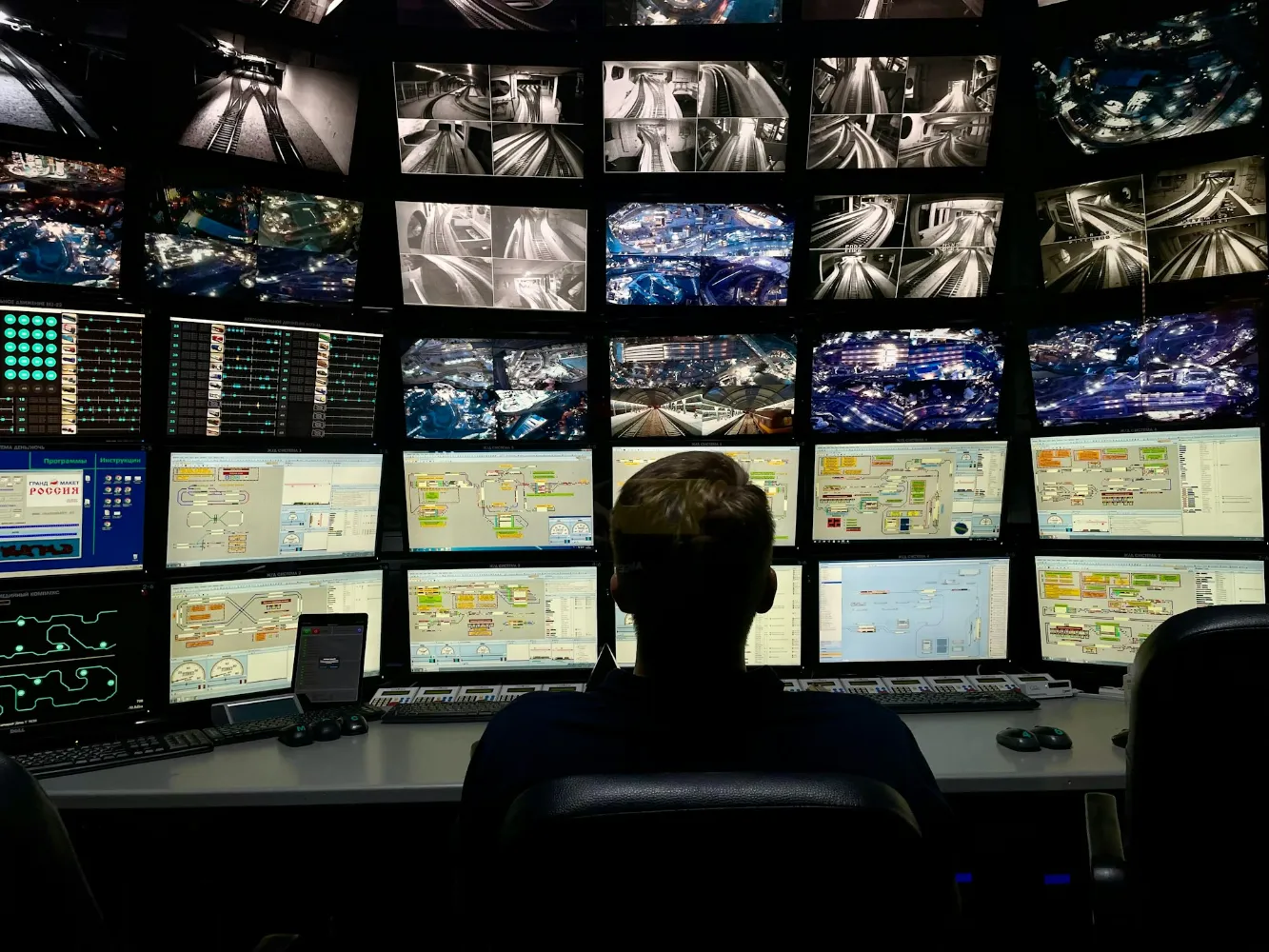
Validating tools for safety-critical operations
Testing new operational tools with experienced operators to confirm they work safely and effectively in practice.
Validating tools for safety-critical operations
Testing new operational tools with experienced operators to confirm they work safely and effectively in practice.
Challenge
Operational traffic management relied on outdated tools and fragmented processes. These tools made it difficult to maintain a clear overview of operations and increased the risk of human error. A new digital application was needed to support consistent and safe operations across the network.
Impact
The new application streamlined operational processes and improved situational awareness for operators. By providing a consistent and reliable digital tool, it reduced error risk and supported safer daily operations.
Approach
We integrated human-centered design into the development process from the start. Through context-of-use analysis and task analysis, we translated operational needs into interface requirements. Iterative design sessions and feedback workshops with operators ensured that the application supported real working practices.

Improving operational console design
Redesigning operator consoles so controls, displays, and equipment are easier and safer to use.
Improving operational console design
Redesigning operator consoles so controls, displays, and equipment are easier and safer to use.
Challenge
An organisation was developing a new standard console that needed to support several different operational roles. The design had to accommodate various tasks while meeting ergonomic standards and ensuring accessibility for all users. Early prototypes raised questions about usability and physical comfort.
Impact
The redesigned console improved accessibility, comfort, and usability for a wide range of operational tasks. This reduced physical strain and supported more efficient working conditions for operators.
Approach
We evaluated the prototype console together with operators using physical mock-ups and usability sessions. Through observation and user feedback, we identified areas for improvement related to height adjustment, device positioning, and accessibility. These insights were translated into concrete design revisions.

Designing a human-machine interface for a safety-critical system
Designing operator interfaces that present complex information clearly and support safe and reliable decision making.
Designing a human-machine interface for a safety-critical system
Designing operator interfaces that present complex information clearly and support safe and reliable decision making.
Challenge
A new safety-critical system required an interface that would support operators in performing complex tasks reliably and efficiently. The system needed to present critical information clearly while minimizing the risk of misinterpretation or operational errors. Achieving this required a design that balanced technical requirements with real user needs.
Impact
The resulting interface improved usability and situational awareness for operators. By reducing complexity and supporting intuitive interaction, the design contributed to safer and more efficient operations.
Approach
We applied a human-centered design process in which operators were involved throughout the development stages. Interface concepts were developed iteratively and evaluated through simulations, pilot studies, and structured feedback sessions with users. This ensured that the design supported real operational workflows.
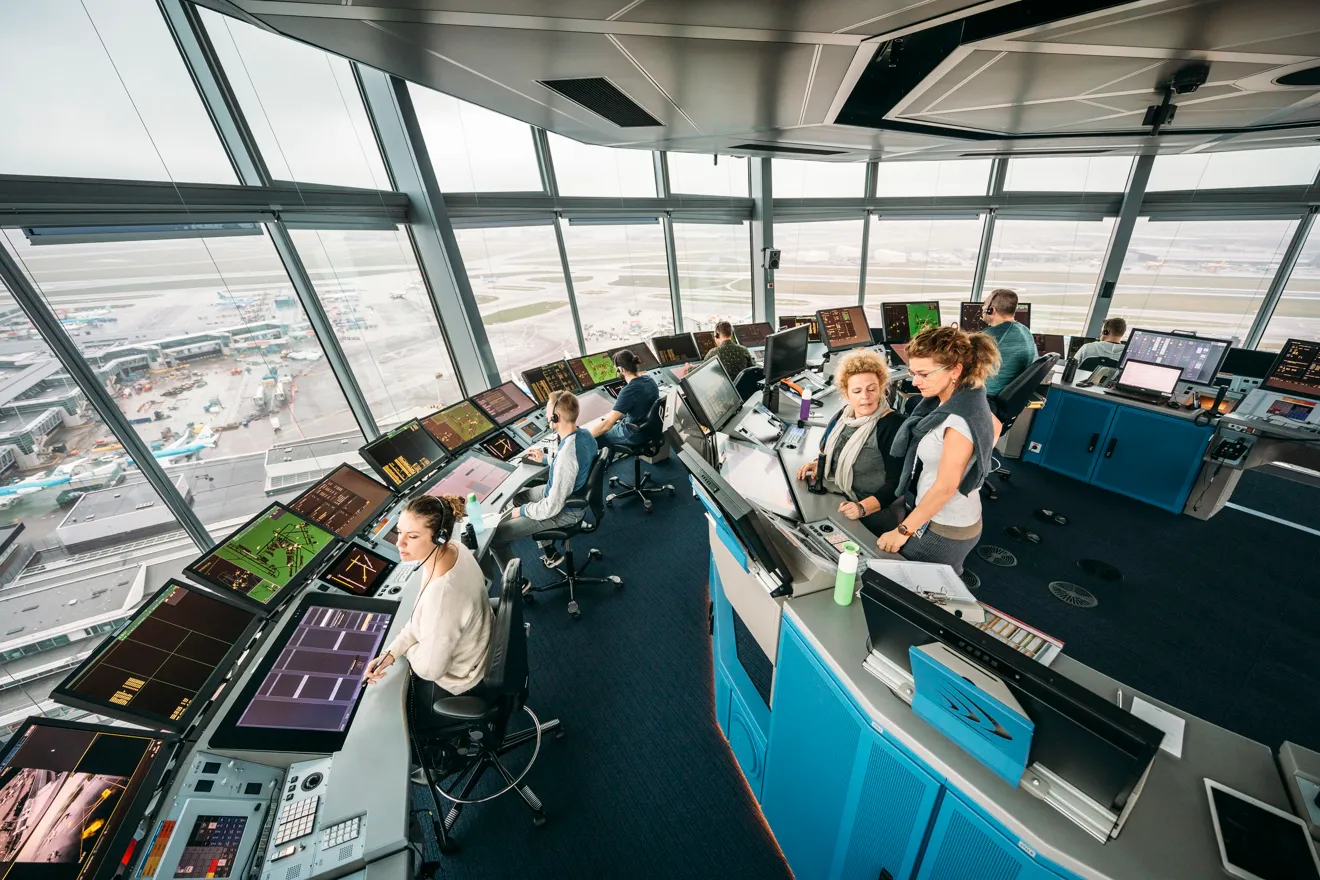
Designing ergonomic control tower workspaces
Designing control tower layouts that support visibility, communication, and comfortable long-duration operations.
Designing ergonomic control tower workspaces
Designing control tower layouts that support visibility, communication, and comfortable long-duration operations.
Challenge
An operational control environment needed to be redesigned to support a new staffing model with fewer operators per shift. Despite the reduced staffing, the workspace still had to support safe and efficient operations. The design therefore needed to carefully consider visibility, communication, and operator workload.
Impact
The redesigned environment supports efficient collaboration and improved operator comfort. As a result, operators can maintain high performance and situational awareness even with a reduced staffing model.
Approach
We conducted an ergonomic analysis of the spatial layout, workstations, and physical environment. Factors such as screen readability, acoustics, sightlines, and physical comfort were evaluated in collaboration with operators and designers. The findings were translated into concrete design recommendations for the new workspace.

Managing workload in driver cabins
Studying how onboard systems, displays, and alerts affect driver attention and workload during train operations.
Managing workload in driver cabins
Studying how onboard systems, displays, and alerts affect driver attention and workload during train operations.
Challenge
Operational cabins increasingly contain multiple devices and digital applications that support monitoring and communication tasks. While these technologies provide useful information, they can also increase workload or distract operators from their primary responsibilities. The organisation needed a structured way to evaluate how these devices interact with the core operational task.
Impact
The method provided valuable insights into which devices could safely be integrated and which introduced unnecessary distraction. It now supports organisations in making informed decisions about the introduction of new in-cabin technologies.
Approach
We developed an assessment method that integrates scientific models of workload and distraction. The method evaluates how individual devices influence cognitive load, attention, and task performance. It can be applied both to existing cabin configurations and to evaluate new technologies before they are introduced.
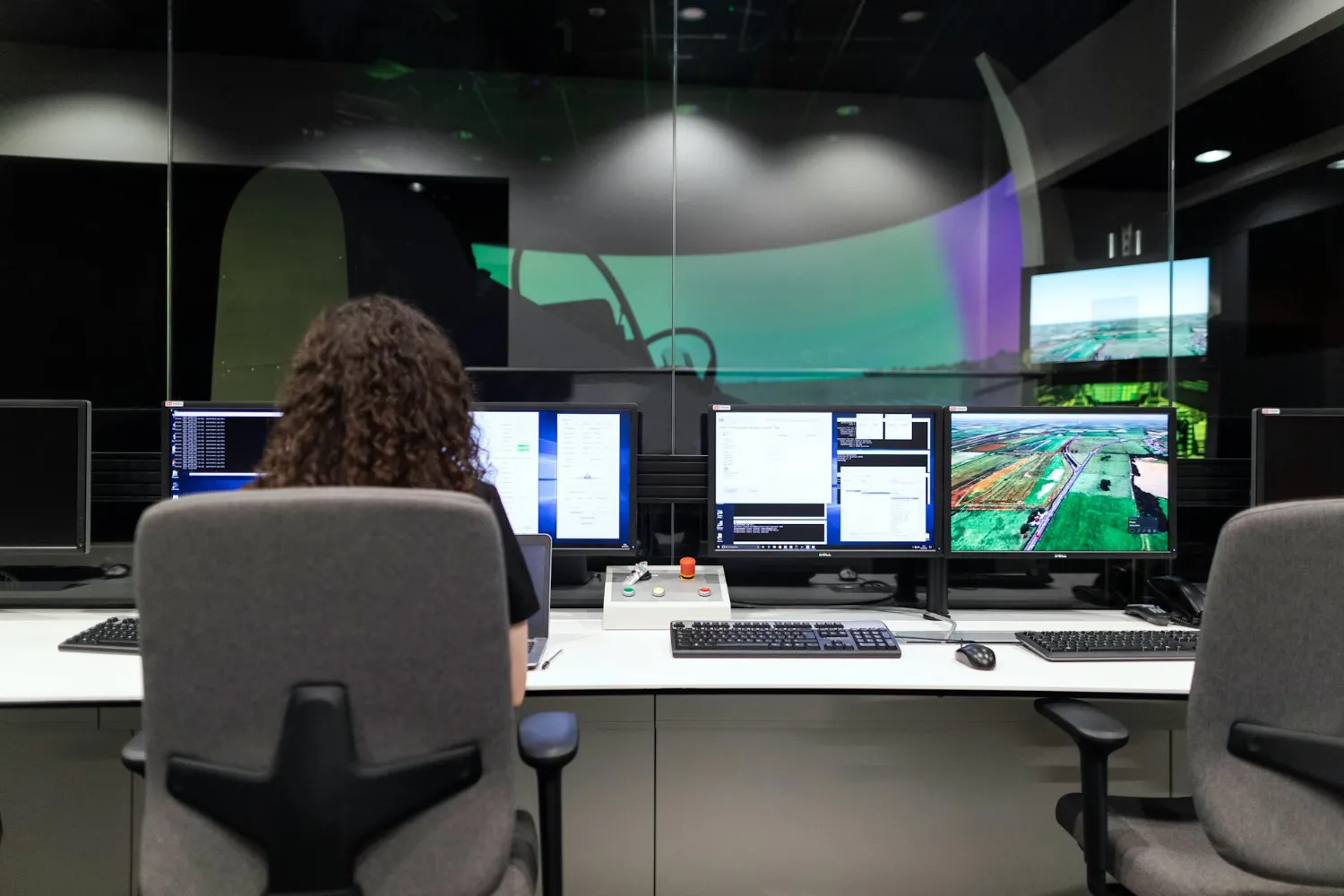
Designing operator control rooms
Designing control room layouts that support good visibility, clear communication, and effective decision making.
Designing operator control rooms
Designing control room layouts that support good visibility, clear communication, and effective decision making.
Challenge
A new safety-critical control system was being introduced across a national operational network. Before full deployment, the organisation wanted to understand how the system would affect the performance and workload of different user groups involved in daily operations. It was particularly important to identify situations where the system could increase complexity or create potential error risks.
Impact
The study revealed key risk areas, including moments where workload increased or where system behaviour could lead to confusion. These insights informed improvements in system design and training, supporting a safer and more effective implementation.
Approach
We conducted a comprehensive human factors evaluation involving several operational roles. Simulator studies, task analyses, observations, and questionnaires were used to analyse workload, attention, and decision-making processes. By studying both individual and collaborative tasks, we identified how the new system influenced operational performance.
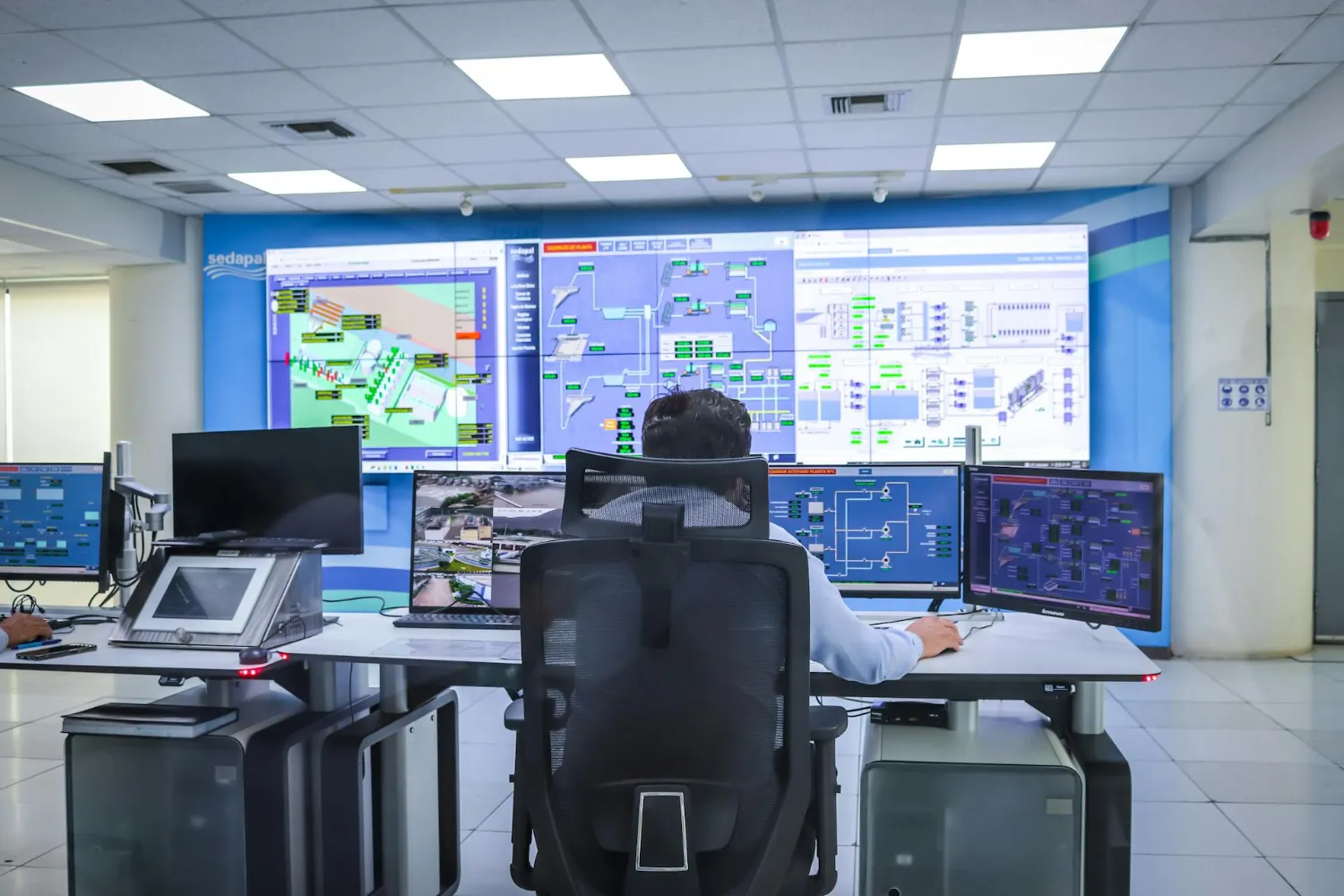
Designing interfaces for safety-critical systems in control room
Designing operator interfaces for control and monitoring systems so people can quickly understand information and take the right actions.
Designing interfaces for safety-critical systems in control room
Designing operator interfaces for control and monitoring systems so people can quickly understand information and take the right actions.
Challenge
An industrial facility was introducing a new production process that required a redesigned control room. The workspace needed to support operators in monitoring complex systems, communicating effectively, and maintaining situational awareness during critical operations. The challenge was to create a layout that would support efficient workflows while also ensuring operator comfort and safety.
Impact
The final control room design improved visibility, communication, and ergonomics. This enabled operators to manage the process more effectively while reducing workload and operational risk.
Approach
We worked closely with operators and designers to understand operational workflows and user needs. Through workshops and design sessions, we translated these insights into design principles for layout, sightlines, communication flows, and information presentation. Multiple conceptual layouts were developed and iteratively refined based on feedback from the project team and end users.
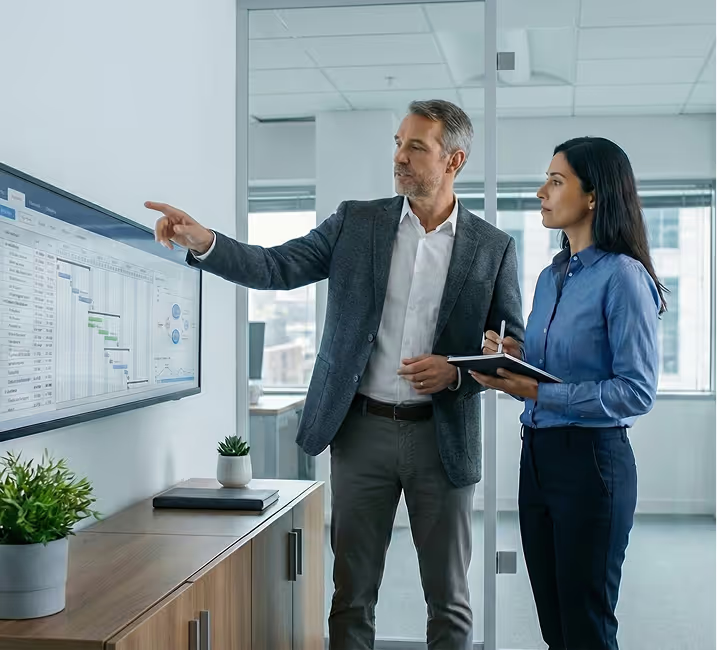
Validating tools for safety-critical operations
Testing operational tools with experienced users to ensure they are intuitive, reliable, and safe to use.
Validating tools for safety-critical operations
Testing operational tools with experienced users to ensure they are intuitive, reliable, and safe to use.
Challenge
A new safety-critical control system introduced several prototype tools intended to support operational staff in their daily tasks. Before these tools could be deployed, the organisation needed evidence that they were intuitive, reliable, and suitable for real operational use. Poor usability could increase the risk of mistakes in an already complex working environment.
Impact
The study provided clear recommendations on which tools were ready for operational use and which required further refinement. This enabled informed implementation decisions and ensured that the tools met both usability and safety requirements.
Approach
We conducted a formal usability validation study based on international human factors standards. Experienced operators tested the prototypes in realistic scenarios while we collected data through observation, questionnaires, eye-tracking, and structured debriefings. This combination of methods allowed us to evaluate how effectively the tools supported operational tasks and where usability risks could occur.
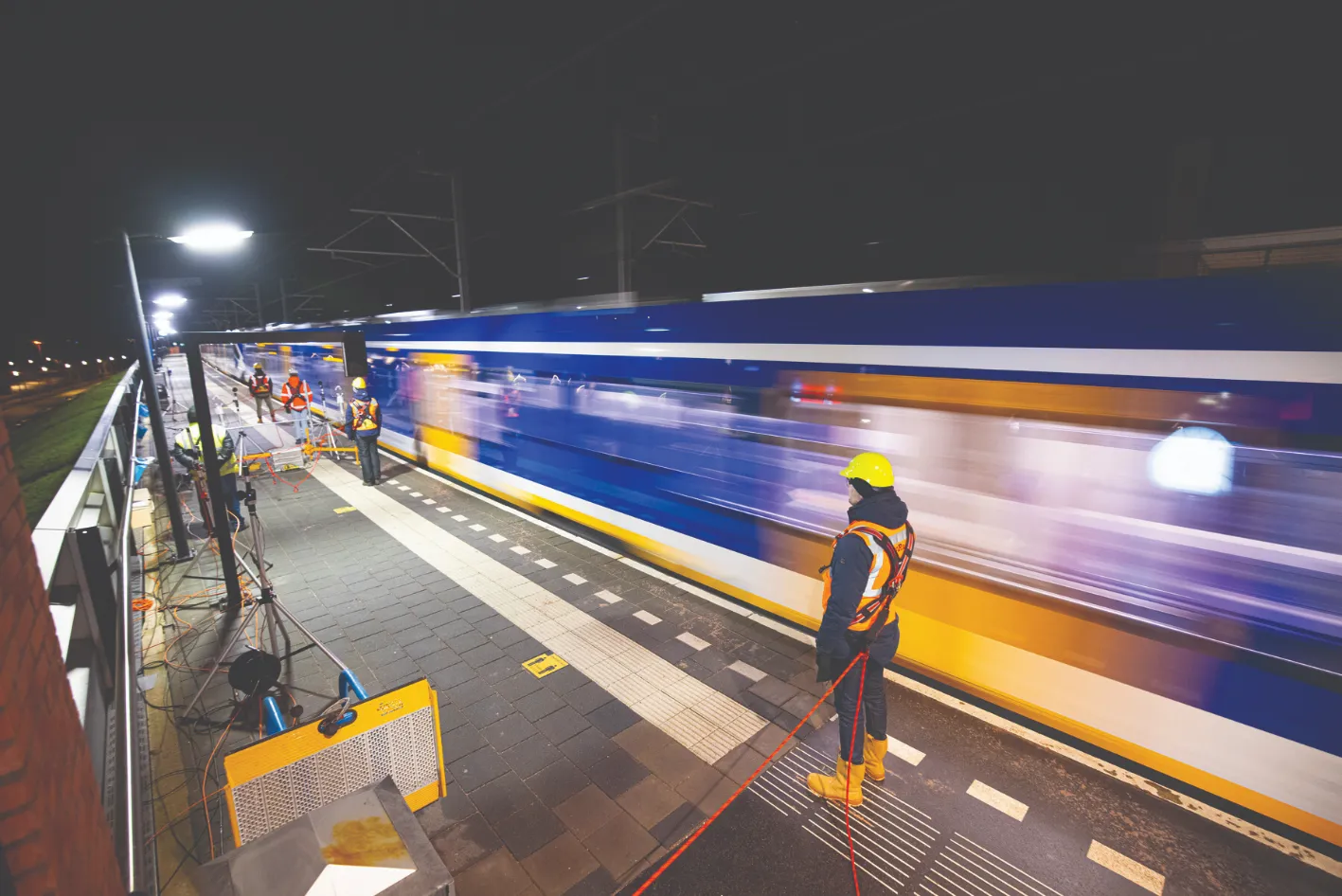
Assessing passenger safety at high-speed passages
Studying how airflow, noise, and perceived safety affect passengers when trains pass platforms at high speed.
Assessing passenger safety at high-speed passages
Studying how airflow, noise, and perceived safety affect passengers when trains pass platforms at high speed.
Challenge
An infrastructure operator wanted to increase the speed of vehicles passing passenger areas. Before implementing this change, it was necessary to understand how higher speeds would affect people waiting nearby. Environmental factors such as airflow, noise, and perceived safety needed to be assessed to ensure that passengers would not experience unsafe or uncomfortable conditions.
Impact
The study provided evidence that supported a safe increase in passing speeds. It also resulted in a structured methodology for assessing passenger safety and comfort in similar high-speed operational environments.
Approach
We designed and conducted a field study in a real operational environment. Environmental conditions such as airflow and noise levels were measured during high-speed passages, while participants shared their experiences and perceptions of safety and comfort. By combining objective measurements with user feedback, we gained a comprehensive understanding of how people experienced the situation.
ISO certified